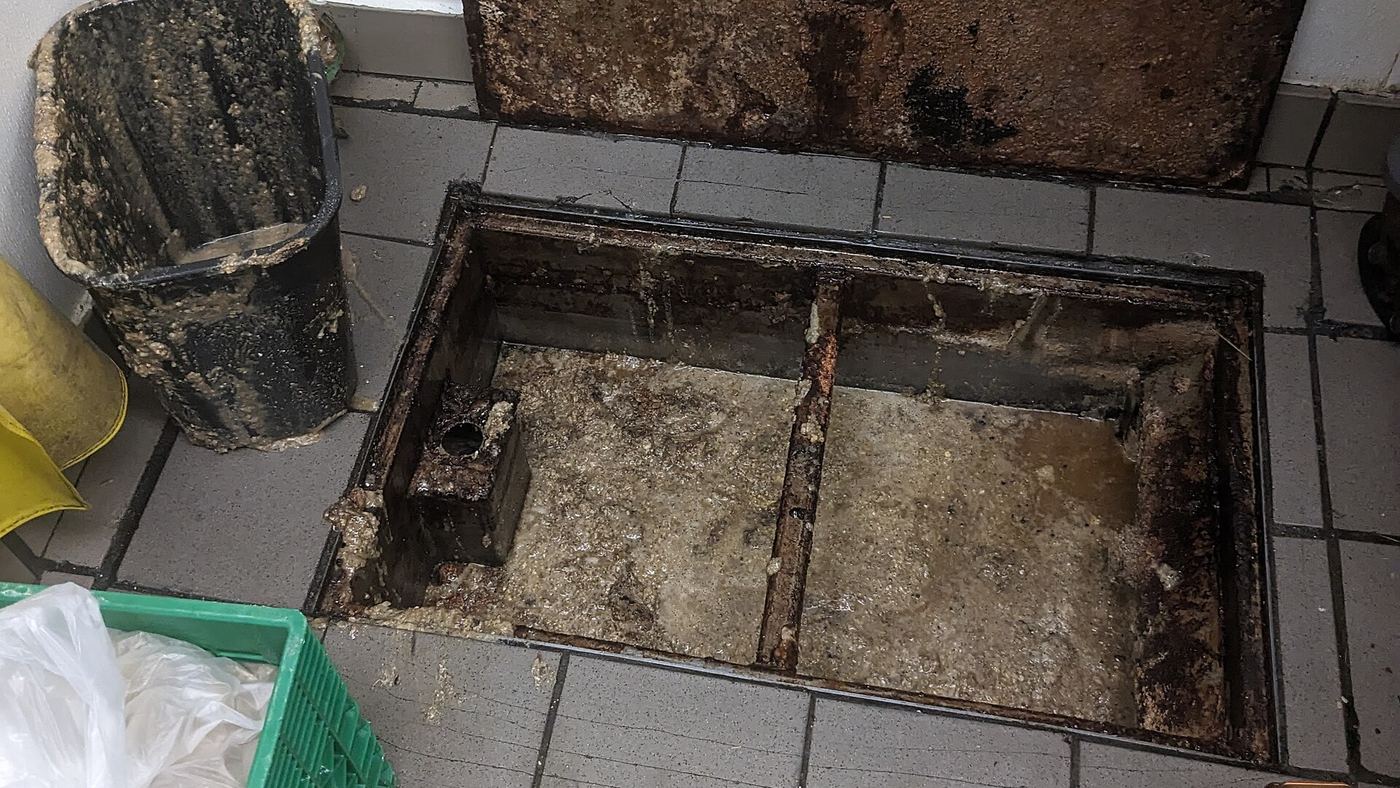
Photo: Hannah Clover, CC BY 4.0, via source.

Facts checked 2026-11-15.
A grease trap catches fat and oil before it reaches the sewer. Tell New York Commercial Kitchen Connect what your kitchen has and the request goes to grease trap companies serving your area. The company installs, pumps or cleans the trap, and you hire it directly.
1. What the Plumbing Code requires
Section 1003.3.1 of the Plumbing Code of New York State calls for a grease interceptor or an automatic grease removal device. It receives drainage from fixtures and equipment with grease-laden waste in food preparation areas. The list takes in pot sinks, prerinse sinks, soup kettles, wok stations, floor drains or sinks that kettles drain into, automatic hood wash units and dishwashers without a prerinse sink.
A food waste disposer must not discharge to a grease interceptor, under 1003.3.2. The purpose, in 1003.1, is to keep oil, grease, sand and other harmful substances out of the public sewer, a private sewage system or a treatment plant.
2. State outreach on interceptor upkeep
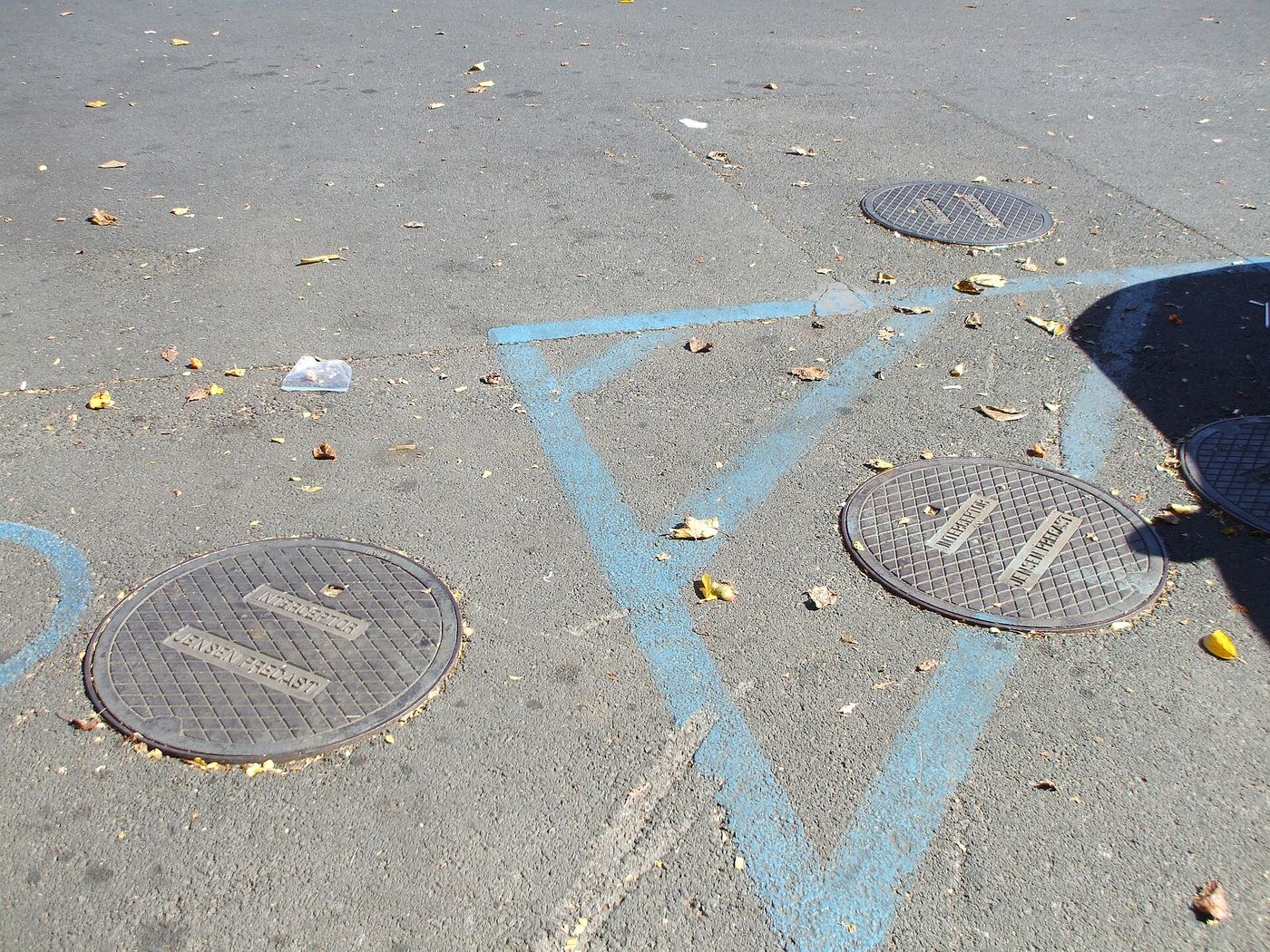
A July 2022 memo from the Department of State covers 19 NYCRR Part 1229-2. It says interceptor covers must be tool-removable, at least 66 pounds, locked or behind a barrier. Each interceptor gets a warning sign. It must be kept up, serviced and cleaned on a regular basis, and records of maintenance, cleaning and repairs stay available to the code enforcement official. The memo notes that a local sewer district often requires a gravity interceptor, usually over 300 gallons and outdoors. It predates the 2025 books, so ask your code office whether it still reads the same.
Get prices for this job. Send one request and pick how many local companies quote it.
Get quotes3. Suffolk County
In Suffolk, a trap installed outside the building is required for subsurface sewage disposal whenever food is prepared commercially or dishes are cleaned. An inside trap is not allowed instead. If a community sewer serves the site, the sewer authority makes the call.
The county's commercial standards say every restaurant installs a grease trap as equipment for its health permit. It goes below grade and outside, ahead of the septic tank or sewer line, at a minimum of 1,500 gallons. Steel traps are prohibited.

4. Erie County
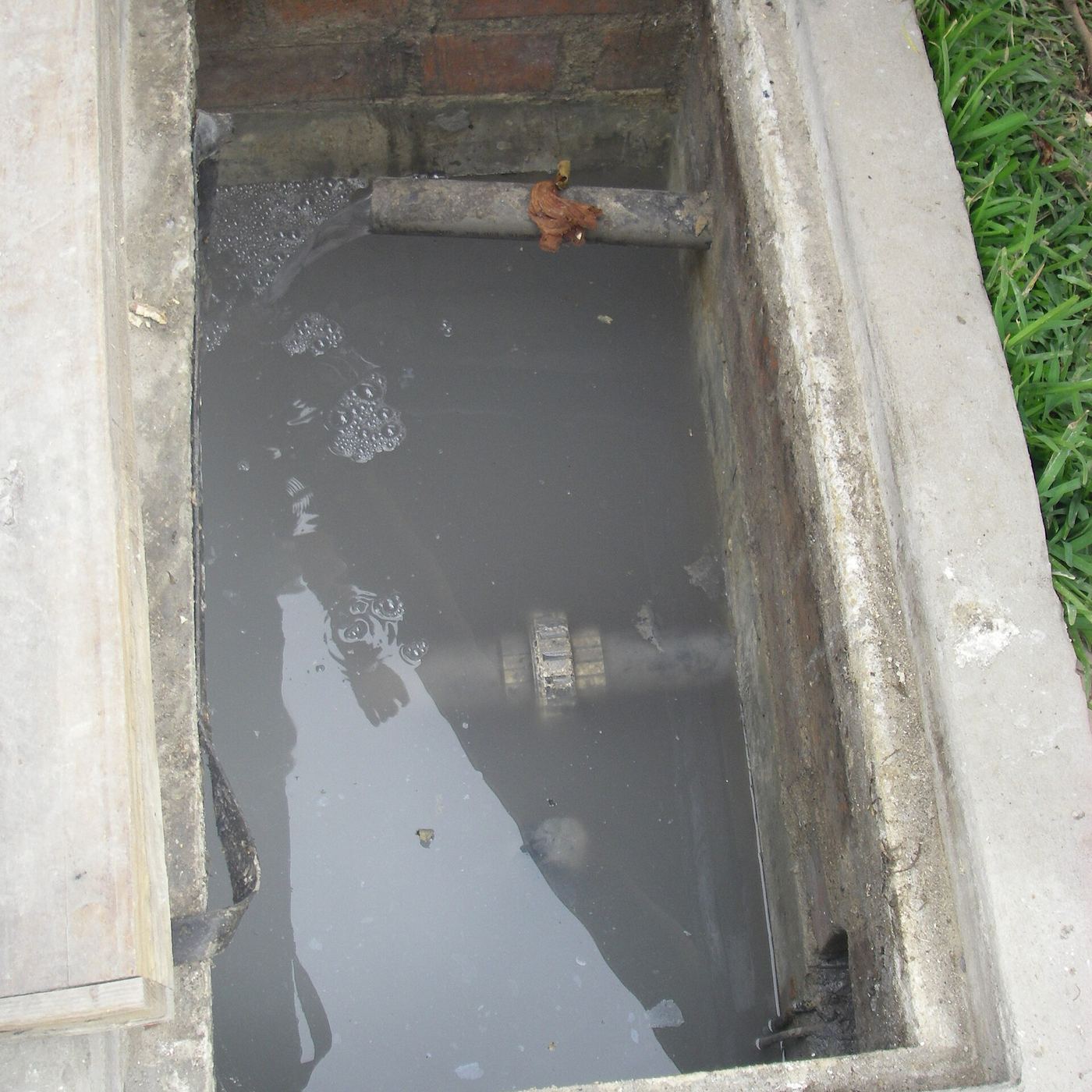
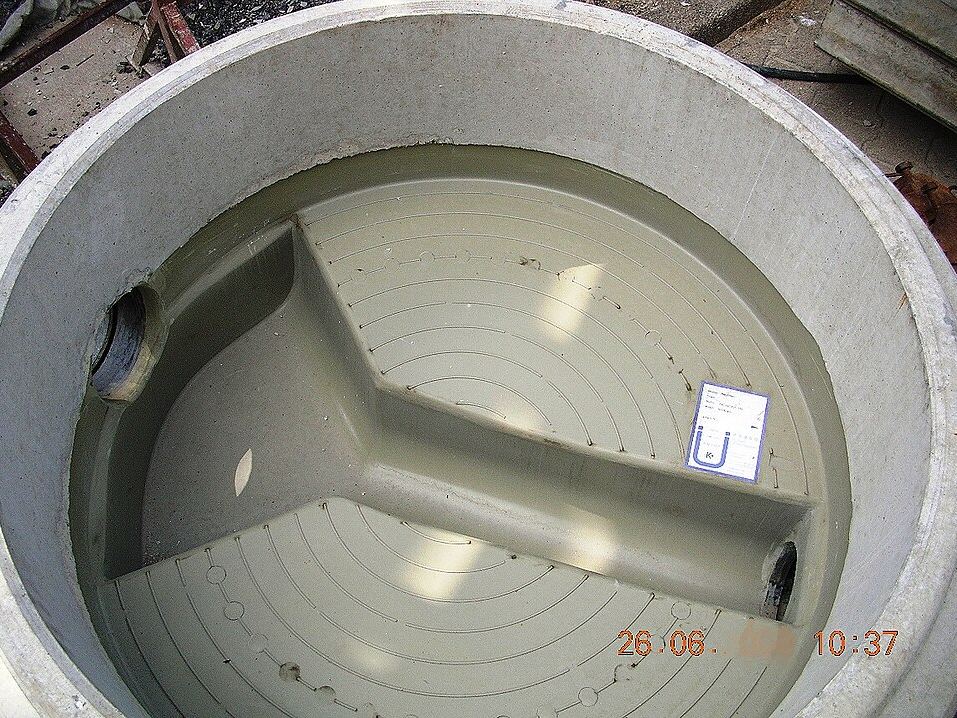
Erie's sewer districts set an exterior oil and grease separator of at least 750 gallons as the minimum standard for food service. Under-counter units protect plumbing but are not accepted for protecting the public sewer. Oil and grease in the discharge may not exceed 100 mg/l.
The user pays for installation, inspection, cleaning and upkeep. Cleaning is recommended once grease and solids pass 25% of the storage volume. An interior trap is opened and looked at least weekly, and a separator is pumped completely when serviced. Keep a bound logbook of dates, plus hauler manifests on site for at least three years. The county says about 25% of sanitary sewer overflows come from grease blockages.
5. What to ask a company
- Will it size the trap to the local rule or only to the fixtures?
- Does it pump the whole unit, and where does it take the waste?
- Will it leave a manifest with its name, the date, the quantity and the disposal site?
- Who files any paperwork with the sewer district?


Questions
How big must a grease trap be in Suffolk County?
The county's commercial standards set a minimum of 1,500 gallons, installed below grade and outside the building. Steel traps are prohibited.
How often should an Erie County grease trap be cleaned?
Erie recommends cleaning once grease and solids fill 25% of the storage volume, and interior traps are checked at least weekly.
Does New York set one statewide cleaning schedule for traps?
Not that we could confirm. Sewer districts set frequencies, so ask the district or utility that serves your address.
What records should a restaurant keep for its grease trap?
Erie asks for a logbook of cleaning and inspection dates and hauler manifests kept on site at least three years.