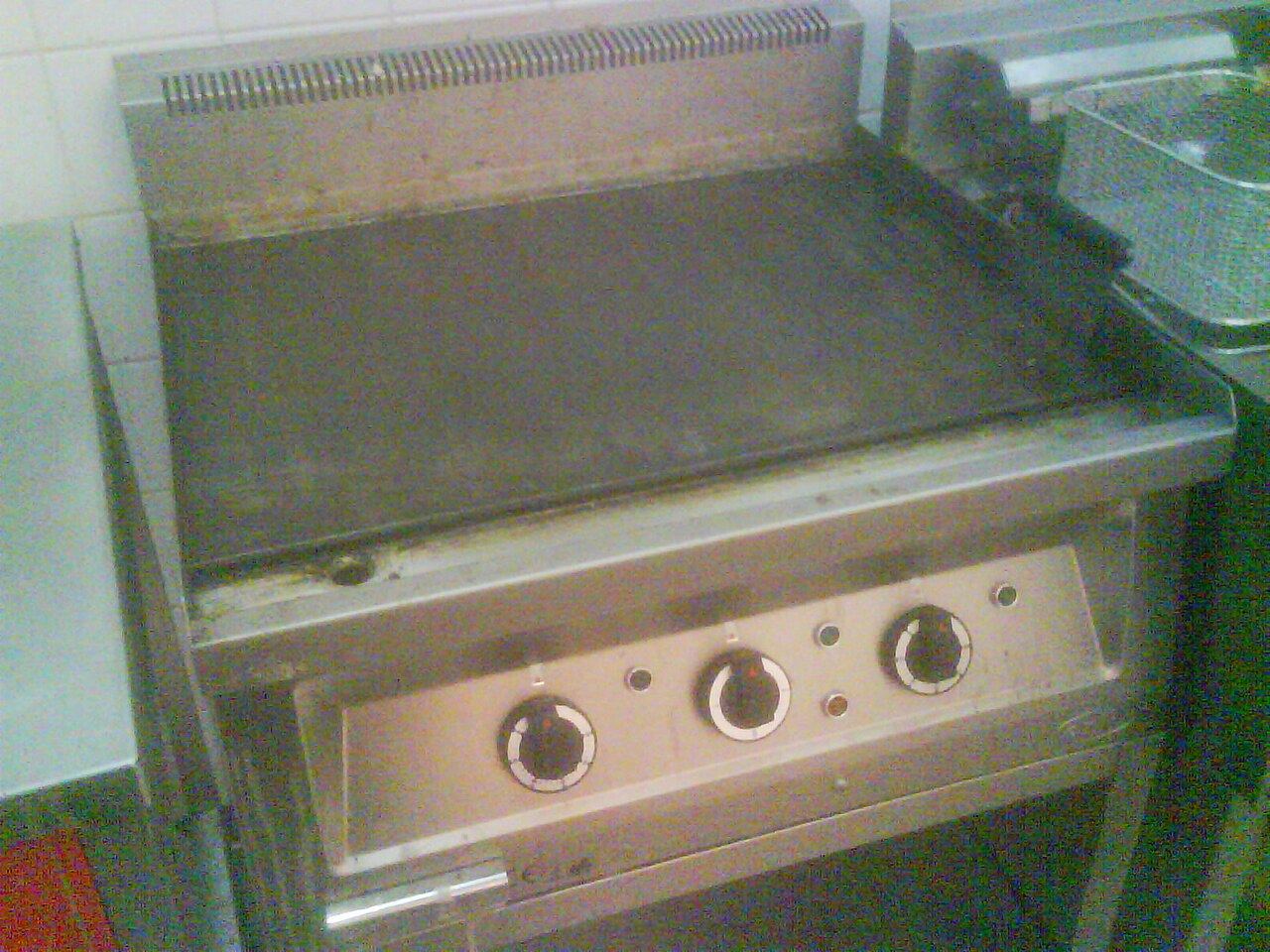
Photo: User:Kristofer2, Public domain, via source.

Facts checked 2026-11-15.
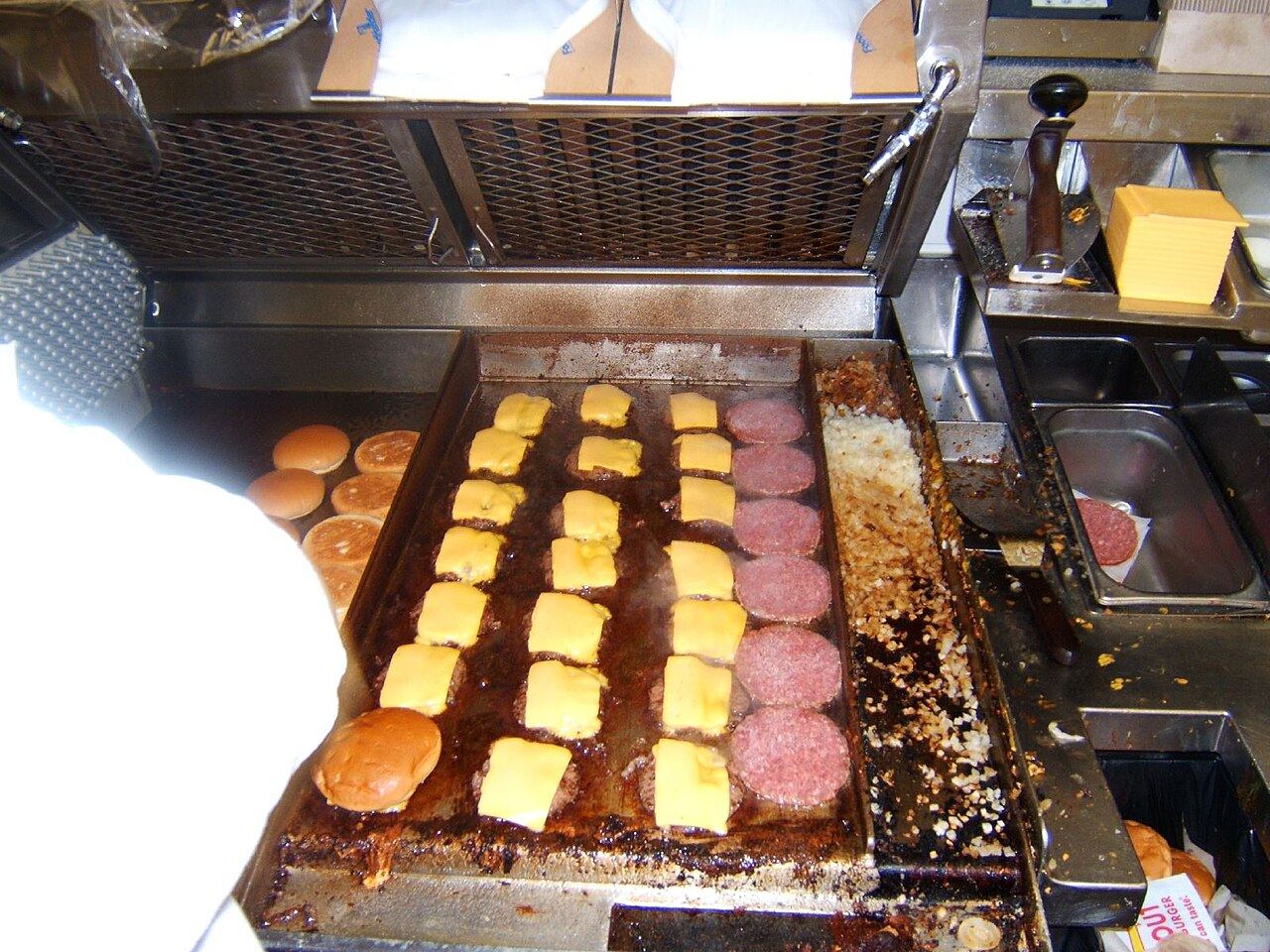
Diners, delis and breakfast counters in New York live on the griddle, and a flat-top is often the first appliance a new cook gets handed. The buyer weighs width, plate thickness, fuel and control type. Send your request through New York Commercial Kitchen Connect and local equipment companies answer with quotes of their own.
1. Width, plate and control
A griddle is a heated flat plate. Vulcan lists 33 models, 26 gas and 7 electric, at 24, 36, 48, 60 and 72 inches, with manual, snap-action or solid-state controls. Star's gas and electric griddles run 15 to 72 inches, with plates of 1 inch on its Ultra-Max and Star-Max lines and 3/4 inch on Toastmaster. Southbend's counterline griddles span 12 to 72 inches with a 1 inch steel plate and a thermostat set between 150 and 400 F.
Makers of griddles include Vulcan, Star and Southbend.
Think about the grease trough, how far a cook reaches to scrape it and whether the unit sits on a counter or a stand. A counter unit needs legs or a sealed base, a point to settle with the county health office.
2. What New York checks
Outside New York City, Subpart 14-1 of the State Sanitary Code governs food service. Section 14-1.91 asks for nontoxic, durable and nonabsorbent equipment, and section 14-1.191 lets the permit-issuing official ask for plans that show equipment and ventilation before construction. NSF/ANSI 4 names griddles and tilting griddle skillets, and NSF's listing has headings for griddles and contact grills. State sections do not mention NSF. Westchester County's plan notice sets rules on hoods, and Suffolk County's guide asks for commercial-grade equipment, NSF approved or equivalent. Gas griddles are tested to ANSI Z83.11 / CGA 1.8 and electric ones to UL 197.
A kitchen inside New York City answers to NYC Health and the city's codes, and its permit steps are on the city's own site.
The 2025 Fire Code of New York State, section 606.2, requires a Type I hood over appliances that make grease vapor. UL's guide lists griddles under Type I hoods and allows ductless hoods only over electric appliances listed to UL 710B. Before a griddle goes onto a line, read the hoods and exhaust page and ask the fire suppression company about the nozzles.
Get prices for this item. One request, and you pick how many sellers quote it.
Get quotes3. Energy use and rebates
ENERGY STAR certifies thermostatically controlled gas and electric griddles, single or double sided, and scores idle energy, with a gas limit of 2,650 BTU per hour per square foot on its page. Manual controls and fry-top ranges are out. For rebates, use the ENERGY STAR Rebate Finder and ask your utility.

4. What to ask a seller
- How wide is the plate, and how thick?
- Thermostatic or manual controls?
- Gas or electric, with what BTU or voltage and phase?
- Counter or stand, legs or sealed base?
- How wide is the hood above it?
- Where does the grease go, and what does the warranty say?
Your griddle request goes to the local equipment companies you choose, between one and five.

Other kitchen equipment
Questions
Does a commercial griddle need a hood in New York?
A commercial griddle needs a Type I hood, which UL's guide lists for griddles and the Fire Code requires over grease-making appliances.
Is a thermostatic griddle better than a manual one?
A thermostatic griddle holds a set temperature with a sensor, and a manual one is set by dial. Only thermostatic models can earn ENERGY STAR, so the choice affects eligibility.
What width of griddle fits a small kitchen?
Makers list griddles from 12 inches up to 72 inches. Measure the counter and the hood above it, then match the plate to your busiest breakfast hour.